
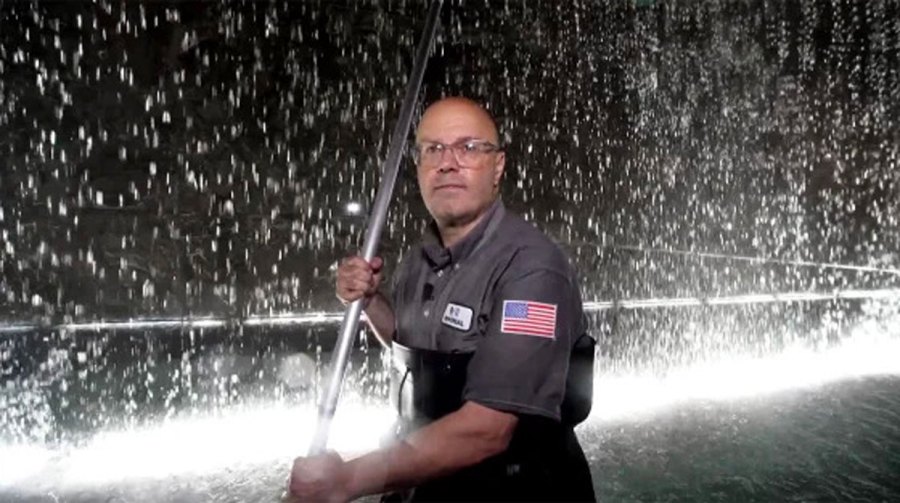
In the still of the night, after the thousands of daily visitors have gone home, Jim Maroon and his team of custodians care for the 9/11 Memorial in what they consider “more than a job.”
Ahead of the 24-year anniversary of Sept. 11, Maroon gave TODAY’s Craig Melvin a rare glimpse into the overnight shift in which custodians care for the solemn memorial. The site in New York City remembers those lost in the terrorist attacks on the World Trade Center in 1993 and 2001.
“It’s more than a job because I’m doing it for the 3,000 that lost their lives and everybody around the world that sees this, and sees that this is not a disaster anymore,” Maroon said on TODAY. “It’s a future, and it’s a bright future.”

The names of 2,983 people who lost their lives in the two attacks are carved in bronze panels along the top of a pair of reflecting pools that each span an acre. More than 12 million people visit the memorial, which is located nearly 30 feet below street level, every year.
The glistening water from a fountain falls into a void that symbolizes the emptiness left by those who lost their lives.
“It’s a quite reflective place of just thinking about what happened,” Maroon said. “What we’ve made this place into. This was honestly hell on Earth, and now we’ve made it heaven.”
The overnight staff removes scratches and markings on the nameplates and cleans out leaves, coins and debris from the pools.
“The fact that they still put so much emphasis on making this place that special for people like me is incredible,” tourist Melody Laishram said on TODAY.
Tony LoCasto, the chief engineer of the 9/11 Memorial & Museum, often receives warm messages from visitors to the memorial.
“They’ll just stick out their hand and say ‘thank you,’ and they’re standing in front of a name that they’re visiting,” LoCasto said on TODAY. “It gives you a greater purpose.”
Custodian Billy Finch, 23, was born after 9/11 happened, but understands the purpose in caring for the memorial.
“This is a position where you’re upholding a very sacred site,” he told Craig. “A place where no matter what race, gender, no matter what you are, everyone was affected in some way. It’s a very noble thing, and I take a lot of pride in it.”
“I don’t think anybody can ever forget the images,” LoCasto said. “It drives me more and more every day to reach another level of perfection.”

Maroon was working at the New York Mercantile Exchange in Manhattan on the day of the Sept. 11 attack. He was crossing the West Side Highway when the first tower was hit.
Decades later, thinking back to that moment still makes Maroon emotional.
“Yeah, it gets me,” he said. “You see these names. I don’t know them. I never met them, but they’re somebody’s mother or father.”
Maroon, LoCasto and the staff of the memorial and museum make sure the memories of the victims all receive proper care, decades after their families suffered an unimaginable loss.
“I always see the memorial — meaning the pools — as a beacon of hope,” LoCasto said.
This story first appeared on TODAY.com. More from TODAY:

Allison Craig is a passionate sports writer and analyst with a deep love for game strategies, player performances, and the latest trends in the sports world. With years of experience covering football, basketball, tennis, and more, she delivers insightful analysis and engaging content for sports enthusiasts.
No responses yet