

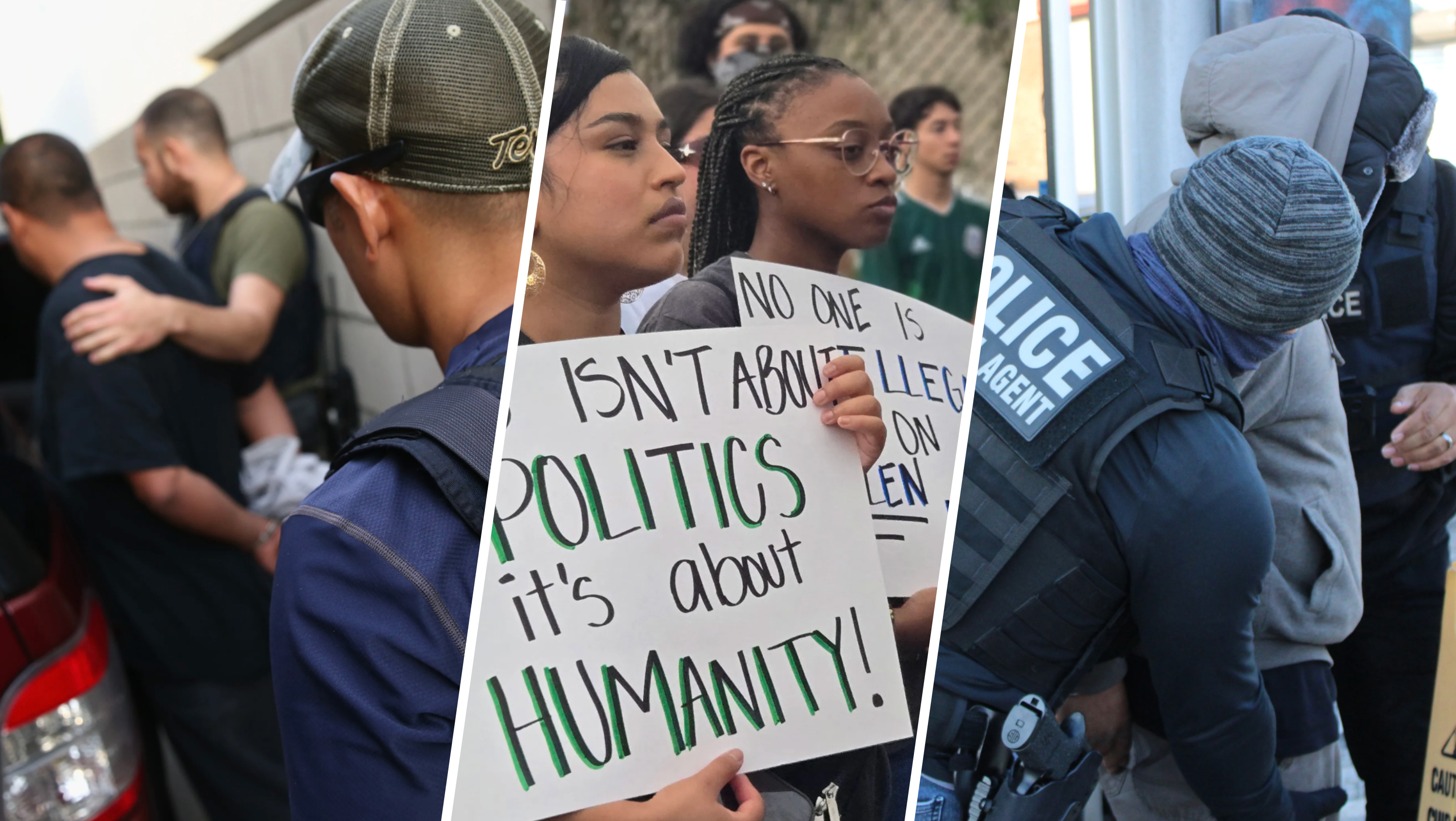
With federal agents continuing to be present in cities nationwide, immigration lawyers remind everyone that, regardless of immigration status, each person has rights under the U.S. Constitution and civil rights laws.
Following reports of federal agents arriving at stores like Home Depot, car washes, residences, courthouses and even private homes, lawyers urge everyone, including witnesses, to know how the law can protect them.
Telemundo 52 spoke with two immigration lawyers about the rights of all people in the country.
Confronted in public places
According to immigration attorney Alex Gálvez, a person can exercise several rights if confronted by an ICE officer or a federal agent in a public place, including:
- If an agent begins questioning you about your immigration status, you have the absolute right to remain silent and are under no obligation to answer.
- If you are not being arrested, you have the right to leave.
- If you have valid, original immigration documents, you can show them to end the questioning.
- You have the right to remain silent if arrested until you speak with an attorney (this includes not stating your name, date of birth, or nationality).
- You have the right to record your interaction with the agents, as long as you are in a public area and do not interfere with the operation.
Visits to homes or businesses
Gálvez also reminds people that they have several rights if agents visit their home or business:
- You have the right to refuse entry if an officer presents an administrative warrant because a judge does not sign these warrants, and you are not obligated to let them in; whereas a court order allows an officer to enter by force without permission.
- You have the right to refuse to answer questions or share personal information.
- If the officer does not have a warrant, then you have the right to deny them entry to your residence.
- If officers force entry, Gálvez recommends that you do not resist, but you can tell those inside the house or business to remain silent and try to record the incident if possible.
- If you are arrested, Gálvez also recommends that you remain silent and do not sign anything until you have spoken with a lawyer.
- In addition, Gálvez advises that you have the right to make phone calls and recommends memorizing at least two phone numbers in case of an emergency.
For an agent to enter your home, the warrant must be signed by a judge, so attorney Alma Rosa Nieto recommends asking to see it through the window or peephole.
According to Gálvez, businesses are considered public areas, but federal agents can only enter certain areas. Access to the kitchen or other areas behind the cash register is considered private and, therefore, requires a warrant.
Who must carry documents?
Gálvez said that the law requires immigrants to carry documentation of their legal status. He said this documentation must be the original, not a copy.
Gálvez said that for naturalized citizens, permanent residents, DACA or TPS recipients and visa workers, it is important to carry documents to avoid arrest and prosecution. (Examples: REAL ID, U.S. Citizenship Card, court records or immigration appointments if the process is ongoing.)
Not having your immigration status identification is a misdemeanor and can lead to jail time and a fine, said Galvez.
Can an arrest be recorded?
As Gálvez explains, protesters and activists, as witnesses, have the right to freedom of expression. They have the right to demonstrate, provided they are not obstructing justice or the responsibilities of immigration officers. This allows people to record as long as they do not interfere.
Gálvez added that if an officer asks them to move back or not stand so close, it can be interpreted as disobeying that official order and thus obstructing justice.
What happens if the person protests?
According to attorney Nieto, protesting and speaking to federal agents is justified if their actions are not threatening another officer’s actions and are not restricting their ability to perform their job.
However, Nieto explained that this could be considered assaulting an officer.
“Perhaps they are assaulting you, and you, in self-defense, touch them; they then use that as an excuse and pretext for an arrest and for charges later,” Nieto said.
Ahilan Arulanantham, professor and co-director of the Center for Immigration Law and Policy at UCLA School of Law, said in an interview with NBC that if you are arrested, do not sign anything, even if you feel pressured. If you are a citizen and believe your detention is unlawful, do not resist orders.

Allison Craig is a passionate sports writer and analyst with a deep love for game strategies, player performances, and the latest trends in the sports world. With years of experience covering football, basketball, tennis, and more, she delivers insightful analysis and engaging content for sports enthusiasts.
No responses yet